



How to Video
By Courtney Sipila
April 22, 2026
One of the most important components of creating a video is shooting the video. It might seem straightforward at first, set up the shot and press record. But depending on the type of shoot, if there's any camera movements and how many people are in frame, it starts to complicate the process. This blog will discuss camera and audio options, camera settings, shot types and a before recording checklist to make sure everything's set for a seamless editing process.
Depending on what you're filming, your equipment needs might vary drastically. But there’s two things you need, a camera and some way to capture audio.
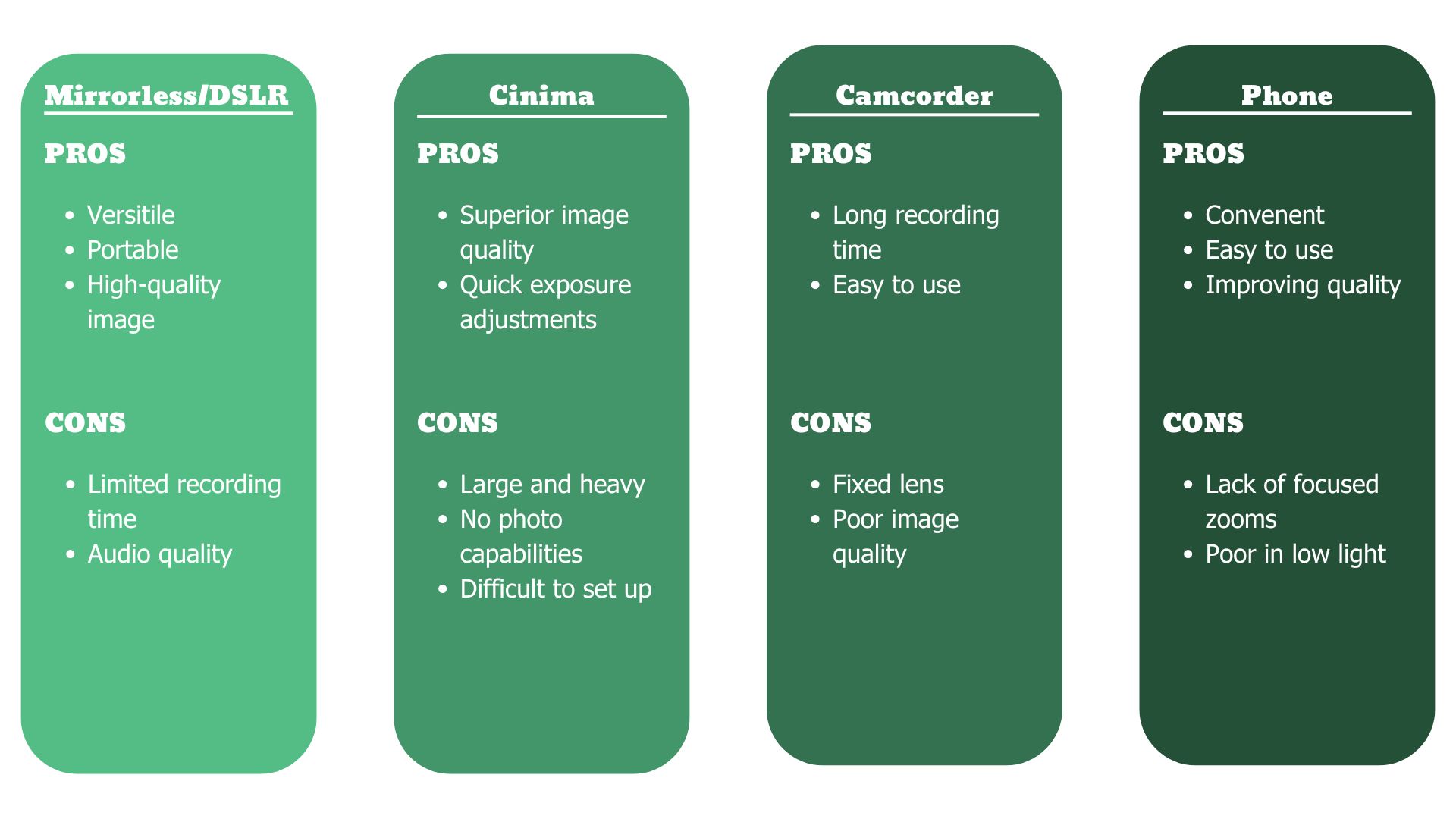
With how advanced technology has become, phone cameras quality is comparable to point and shoot cameras used for vlogging. But if you want to have a more high quality look, here’s some options and their pros + cons
Like with camera equipment, there’s tons of audio options. But depending on what you're filming, some audio devices might be better than others.
Good for covering a larger area and are usually placed above subjects.
A hotshoe microphone is attached to the top of the camera.
Good for when your subject is moving around or far from the camera. There are two different types of Lapels, wired and wireless. The only difference is that the wired lapel needs to be connected to the source whereas wireless uses a bluetooth connection.
A digital recorder can be used as a microphone or an audio recording device used when a camera doesn’t have an XLR port.
When recording audio, you want the volume to fall between -12 and -6 desables. Voice's will fluxuate when recording, so it's important to keep an eye on audio levels!
Now that we covered the camera and audio equipment, there is more equipment to consider using while filming. Everything you film is unique and might require more equipment to take production to the next level.
When filming, it’s important to keep in mind what story you’re trying to tell. A good way to visually show parts of the story is through shot type. For example, if a character is in a position of power, you’d want to use a shot angle looking up towards the character to make the audience feel their authority.
Shot types are different angles to frame a shot. Some of the classic shot types are close ups, wide shots and mid shots. The diagram below is the one I’ve been using since I’ve been filming from Studio Binder’s blogs.
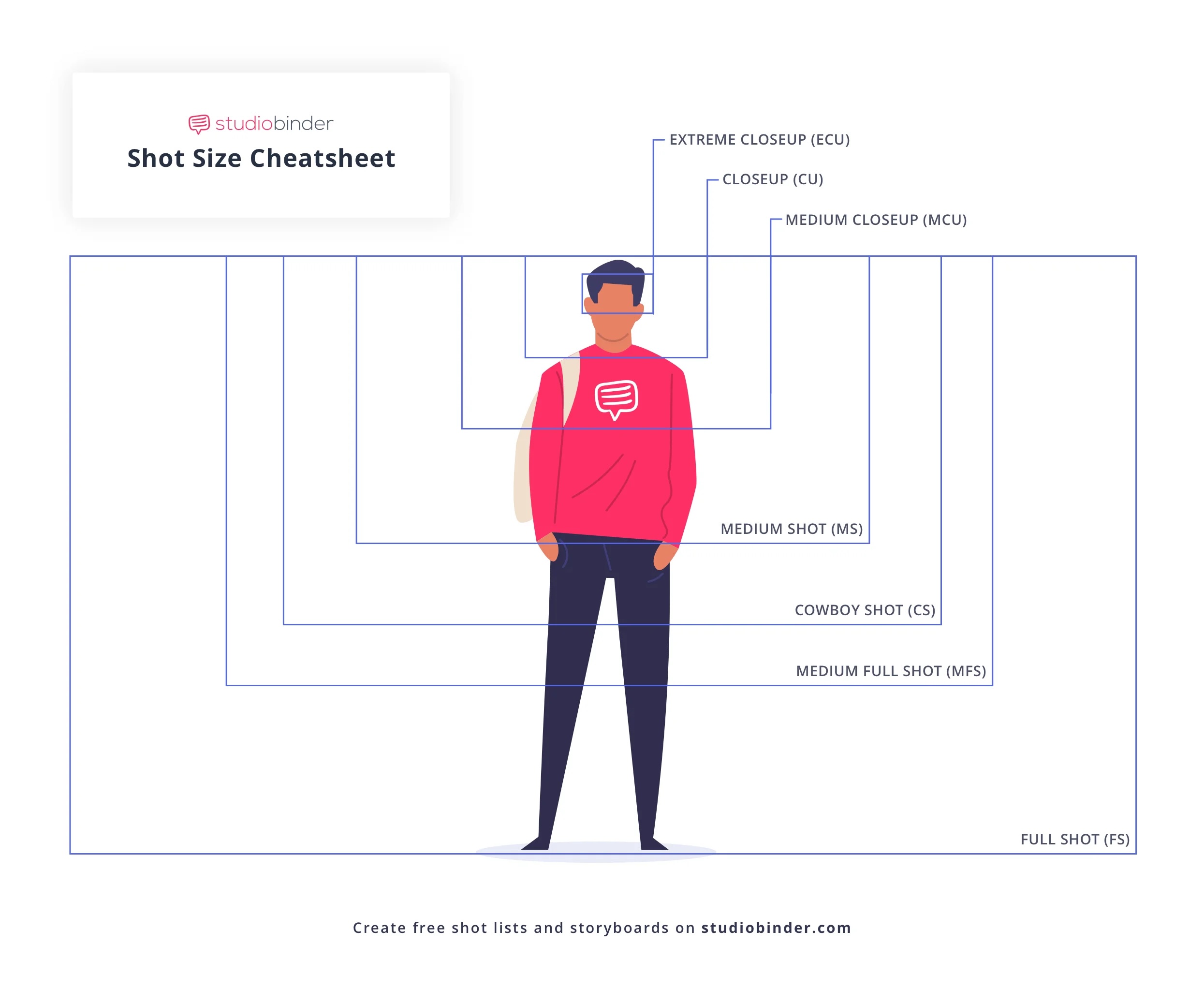
The graphic shows most shot types but there's a few others I wanted to highlight:
Throughout my time recording video, I’ve made A LOT of mistakes. From forgetting to change the video size to having audio levels peaking, it’s made me understand the importance of having a checklist of things to do before filming.
To learn more about editing, check out my previous blog "How to Edit like a Pro!"

Email: csipila13@gmail.com